
The Silhouette That Replaced Skinny Jeans
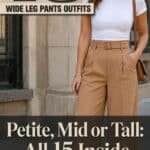
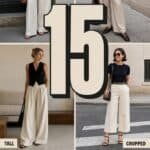
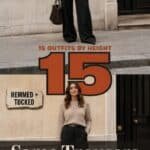
Wide leg pants aren’t a trend anymore, they’re the everyday silhouette, and 2026’s styling philosophy finally caught up: proportion, drape, and confidence rather than disguise. But here’s the part most guides skip. The reason some women swear wide legs swallow them and others live in them isn’t height, it’s whether the proportions are handled. A five-foot-two frame and a five-foot-ten frame need genuinely different rises, hems, and shoes to get the same effortless result, and once you know which adjustments are yours, the silhouette works immediately. So I’ve built this list by height: five outfits for petite frames, five for mid-height, five for tall, each with what makes it work and an honest styling note. Find your section, take the two or three adjustments that apply to you, and wide legs stop being a gamble.
The Proportion Rules That Apply to Everyone
Four principles run under all fifteen looks. Balance the volume, because when the bottom is wide the top should be fitted or tucked, and the contrast between a structured waist and a flowing leg is what creates the flattering line in the first place. Define the waist, since a high rise, a tuck, or a tonal belt separates top half from bottom half and everything below that line reads as leg, which is the entire elongating trick. Respect the hem, as pants that drag on the floor look unfinished at any height while a hem grazing the top of the shoe looks tailored. And choose a shoe with a clean line, keeping the foot sleek so it doesn’t add bulk beneath an already voluminous leg. Those four are universal; the height sections below tell you how far to push each one.
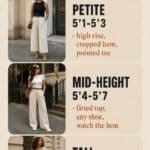
For Petite Frames (Under About 5’4″)
The petite brief is elongation without bulk: high rises, defined waists, slightly narrower legs, and a little lift at the foot. Nothing here requires a four-inch heel, only a clean line from waist to toe.
1. The High-Rise Tuck and Tonal Belt

A high-waisted wide leg with a fitted tee fully tucked and a belt matched to the trousers. The full tuck plus visible belt gives the cleanest proportion line there is, and matching the belt to the pants or shoes avoids a visual interruption at the waist. This is the petite formula everything else builds on.
2. The Cropped Wide Leg and Ankle
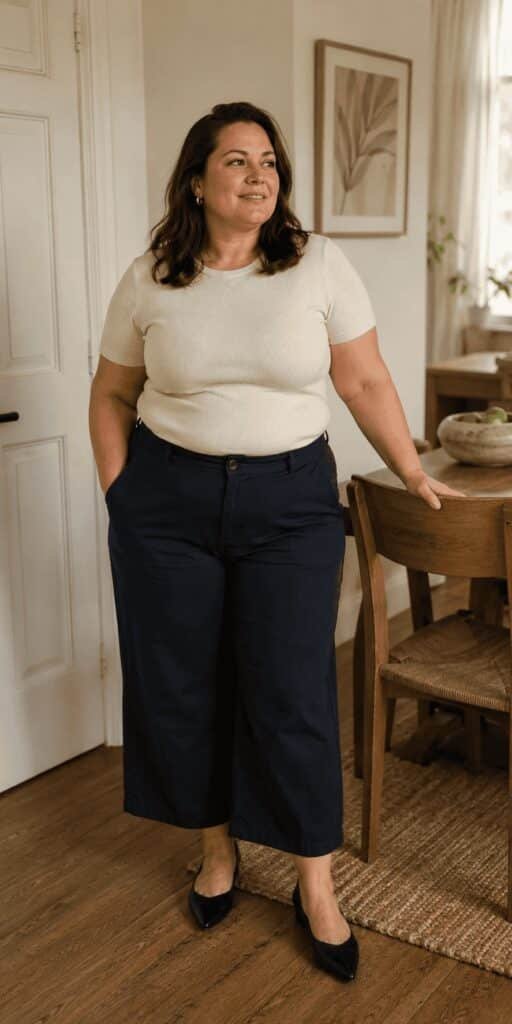
A cropped wide leg that stops just above the ankle, worn with a fitted knit. Showing a little ankle keeps the proportions balanced and stops excess fabric pooling at the floor. It’s often the single most flattering wide-leg cut for petites.
3. The Pointed Flat Lengthener
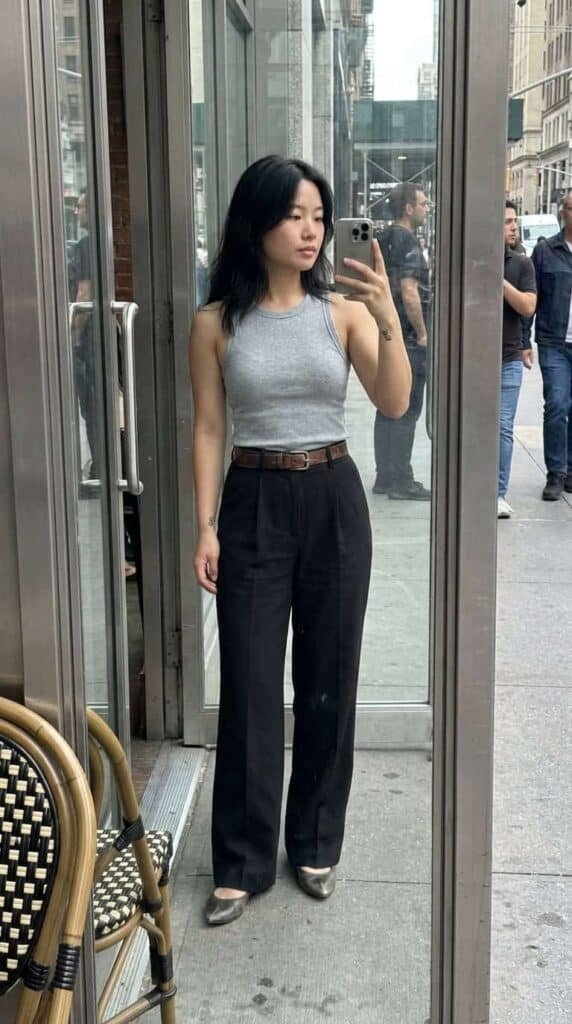
Any wide leg finished with a pointed-toe flat or low pointed heel instead of a chunky shoe. The point continues the leg line where a round or bulky toe cuts it, and it adds elegance without committing to a heel. Skip ankle straps, they slice the line exactly where you want it uninterrupted.
4. The Cropped Blouse Column
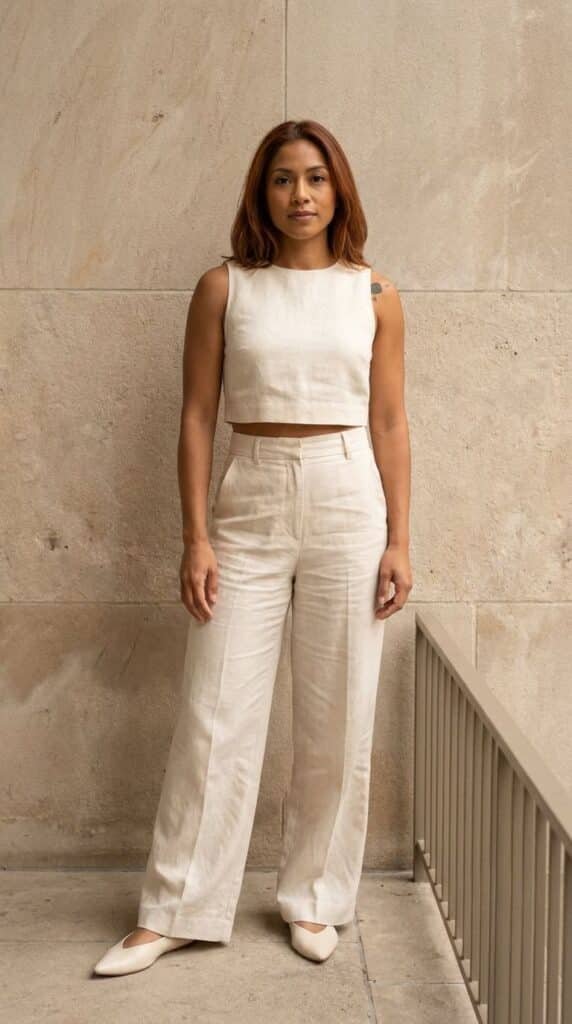
A cropped or waist-length blouse over a high-rise wide leg, all in one tonal family. The hem meets the waistband so no fabric bunches, and the single colour reads as one long line. Cream on cream or navy on navy both work beautifully.
5. The Platform Loafer Winter Look
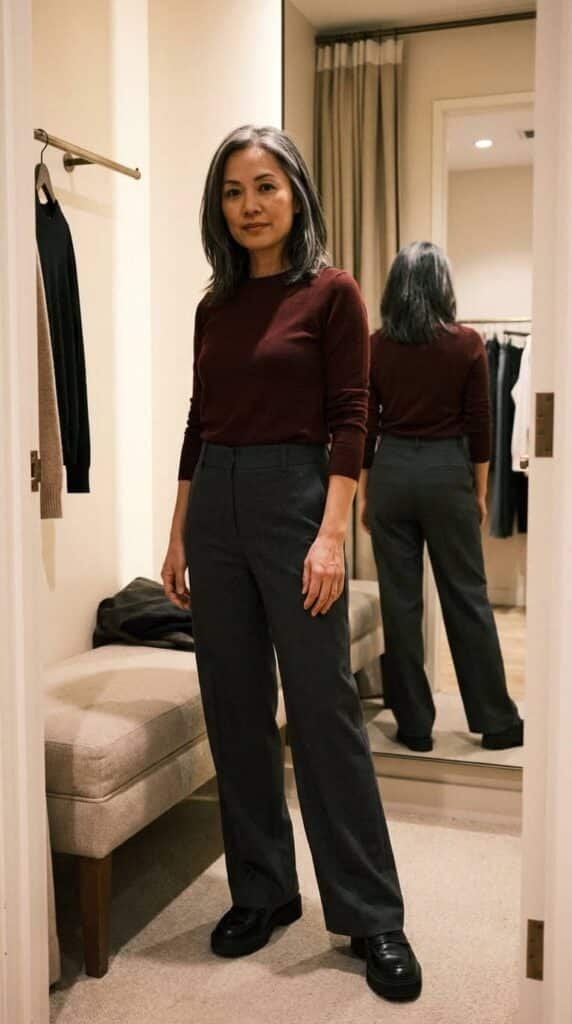
A slightly slimmer wide leg with a fine-knit tucked top and platform loafers or a heeled ankle boot. The platform adds discreet height and keeps the hem off wet pavement, which matters more than it sounds. It’s the cold-weather version of rule three.
For Mid-Height Frames (About 5’4″ to 5’7″)
The middle range gets the widest menu, most standard inseams work with minimal adjustment, so this is where you can play with volume, fabric, and register.
6. The Ribbed Tank and Linen
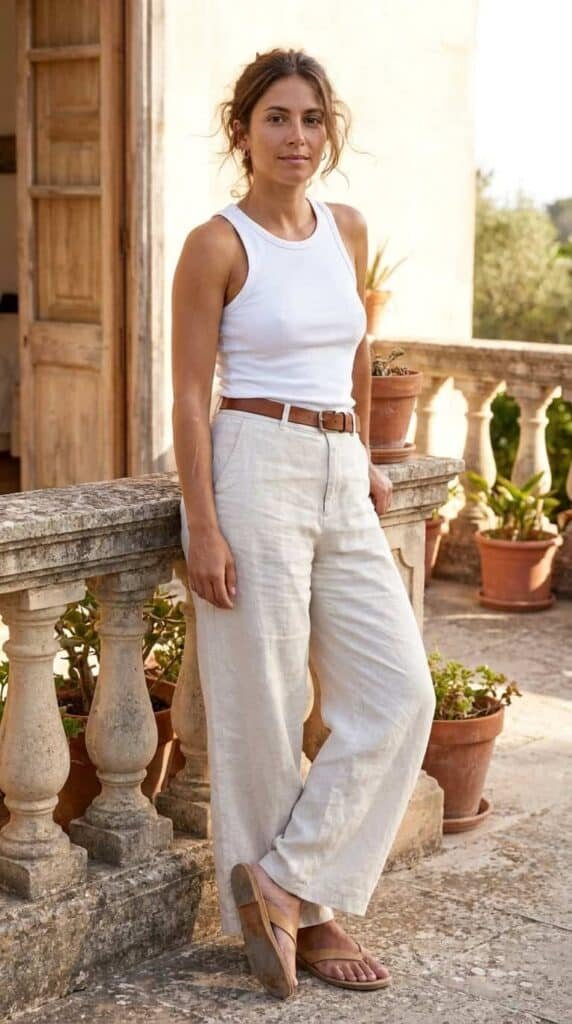
A fitted ribbed tank tucked into flowing linen wide legs, sandals or clean sneakers below. It’s the warm-weather uniform and the clearest demonstration of the fitted-top rule. Linen’s drape does half the styling for you.
7. The Silk Blouse and Loafer Workday
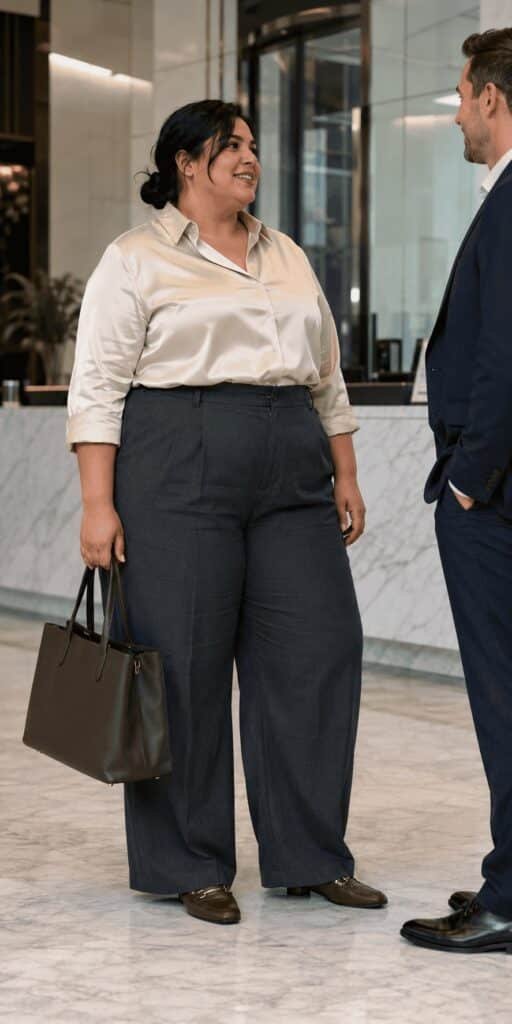
A silky blouse tucked into structured wide-leg trousers with a structured loafer. It’s one of the most effortlessly put-together office outfits available in 2026, and it takes about thirty seconds to assemble. A tote with some structure balances the relaxed volume below.
8. The Blazer Over Tank
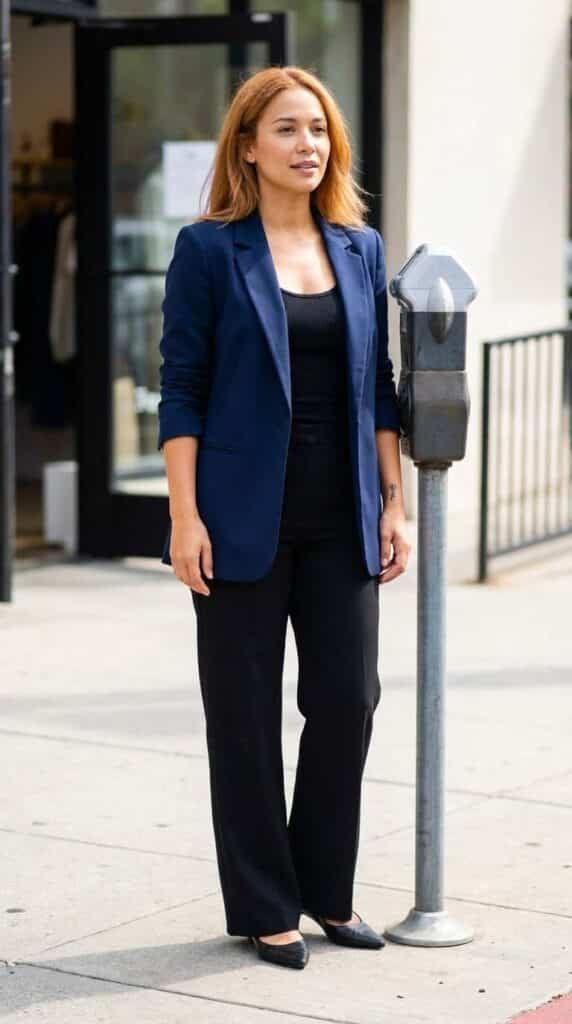
A tailored blazer open over a fitted tank with wide-leg trousers. The blazer’s structure at the shoulder answers the volume at the hem, so the whole silhouette has an outline. Keep the blazer fitted rather than oversized or the balance tips.
9. The Striped Tee Half-Tuck
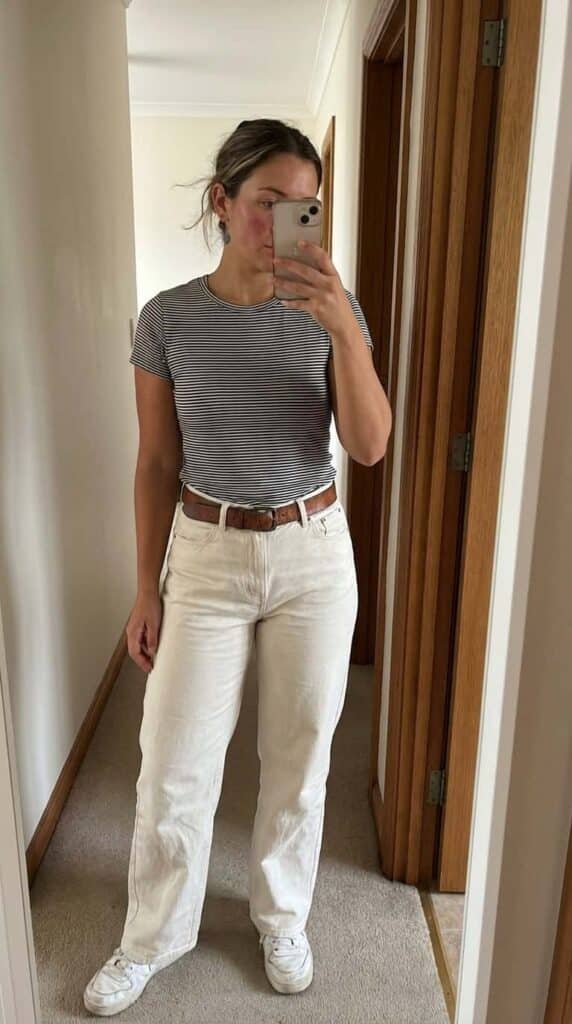
A fitted striped tee, front-tucked into wide legs, with a denim jacket or nothing at all. Counterintuitively, a fitted stripe creates more balanced proportions than a solid, because the horizontal line defines the top half clearly. It’s the most relaxed look here and still reads deliberate.
10. The Ponte Trouser and Retro Sneaker
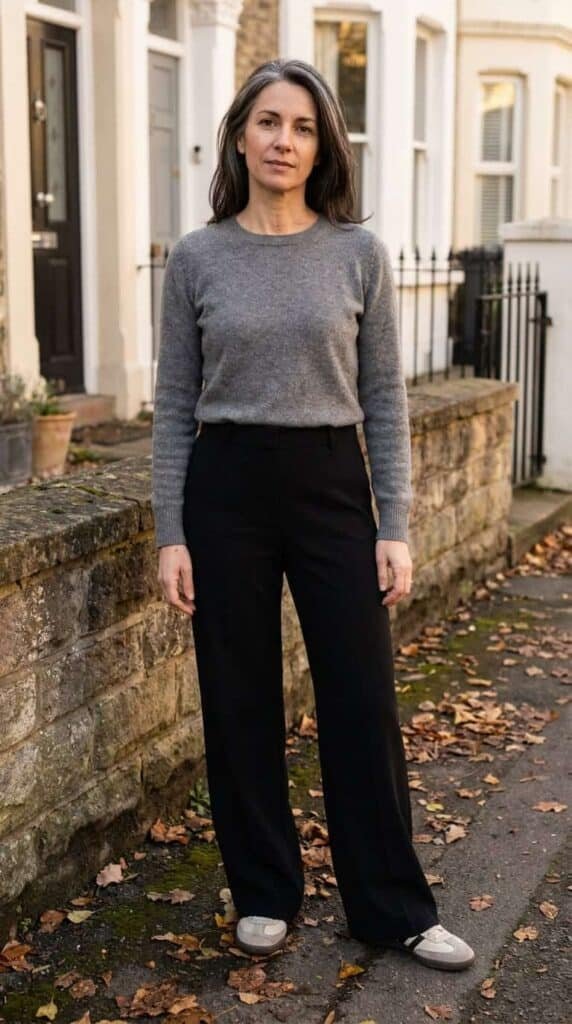
A ponte or heavier-knit wide leg with a slim top and sleek retro sneakers. The pant’s weight holds its shape all day, and the flat shoe works here because a mid-height frame can carry the extra volume. Trim the length or volume up top if the sneaker is chunky.
For Tall Frames (About 5’8″ and Up)
Tall frames get the easiest ride with wide legs, the extra length makes the movement look natural, so the brief shifts from elongating to keeping things balanced and finding the length in the first place.
11. The Floor-Grazing Palazzo
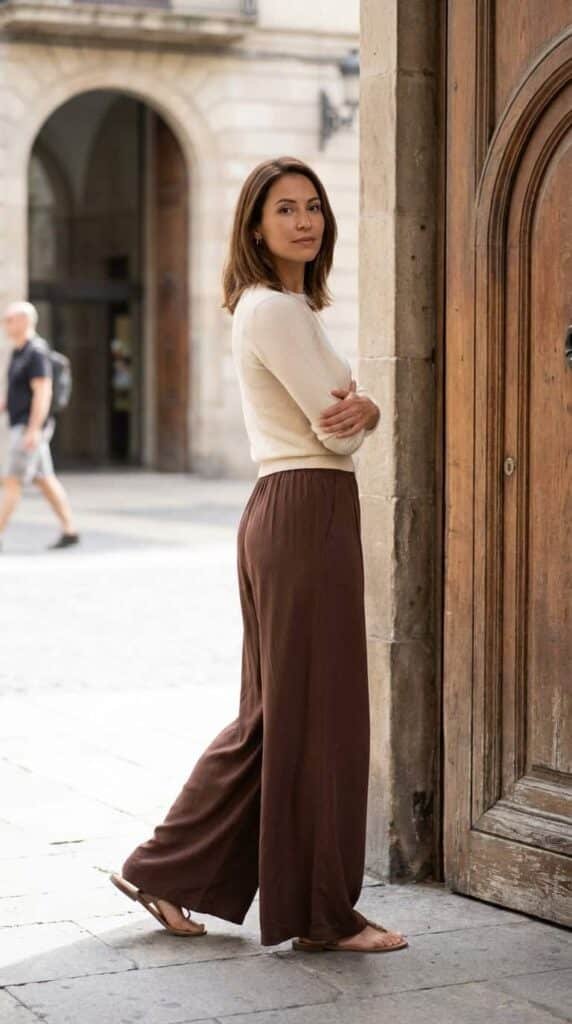
A full palazzo cut hemmed to graze the floor, worn with a fitted top. Tall frames are the ones that can genuinely carry maximum width and length together, which is why the drama looks natural rather than costumed. This is the look petites are borrowing a scaled version of.
12. The Long-Line Column
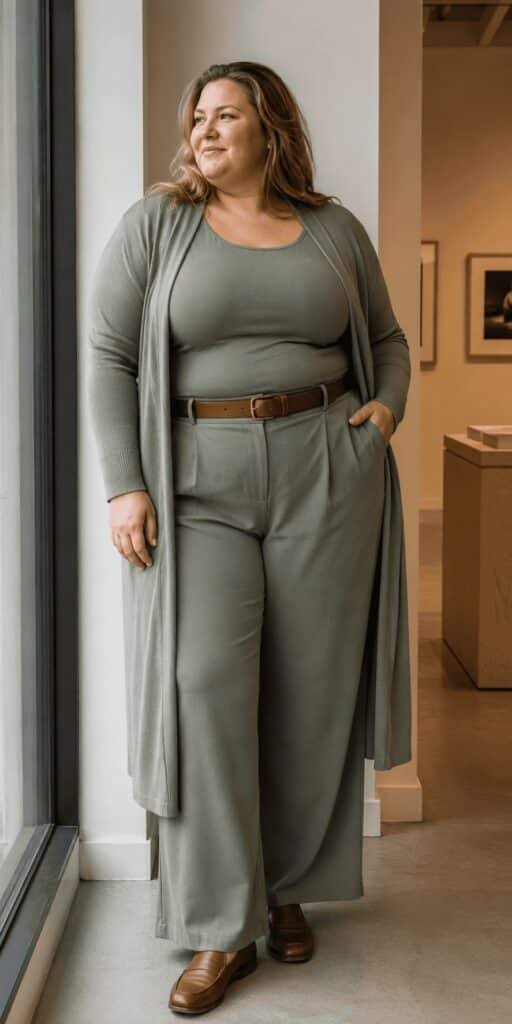
Wide legs and a longer tunic or long cardigan in one tonal family, belted at the waist. Extra height supports a longer top half without the proportions collapsing, provided the waist is still marked. Without the belt this becomes a shapeless column, with it, it’s architecture.
13. The Flowing Fabric Statement
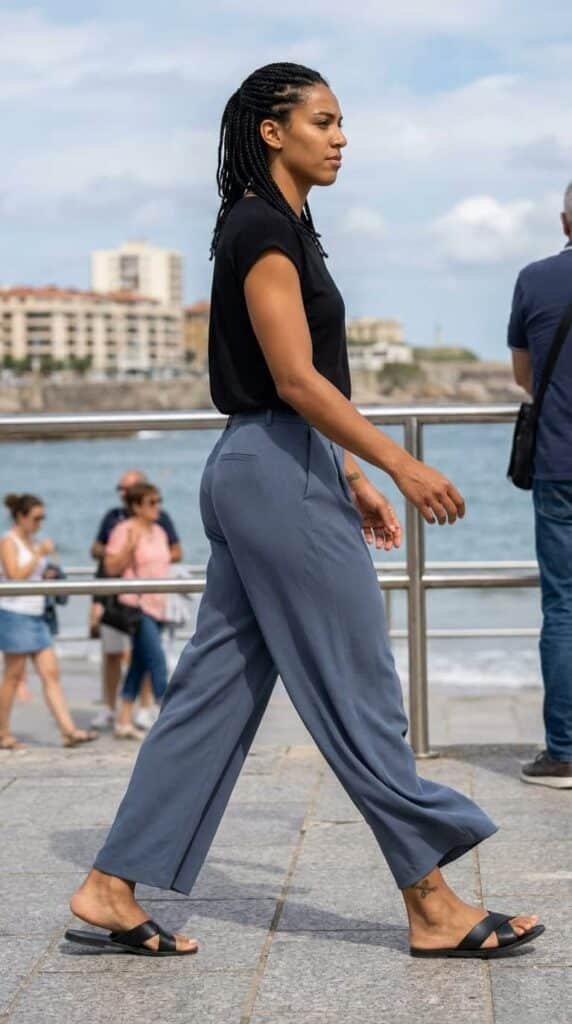
Wide legs in a fluid fabric, crepe, satin, or a soft twill, that moves visibly when you walk. Longer legs give the fabric more distance to travel, so the movement becomes the outfit’s whole personality. Keep the top simple and let the walk do the work.
14. The Flat Shoe Freedom
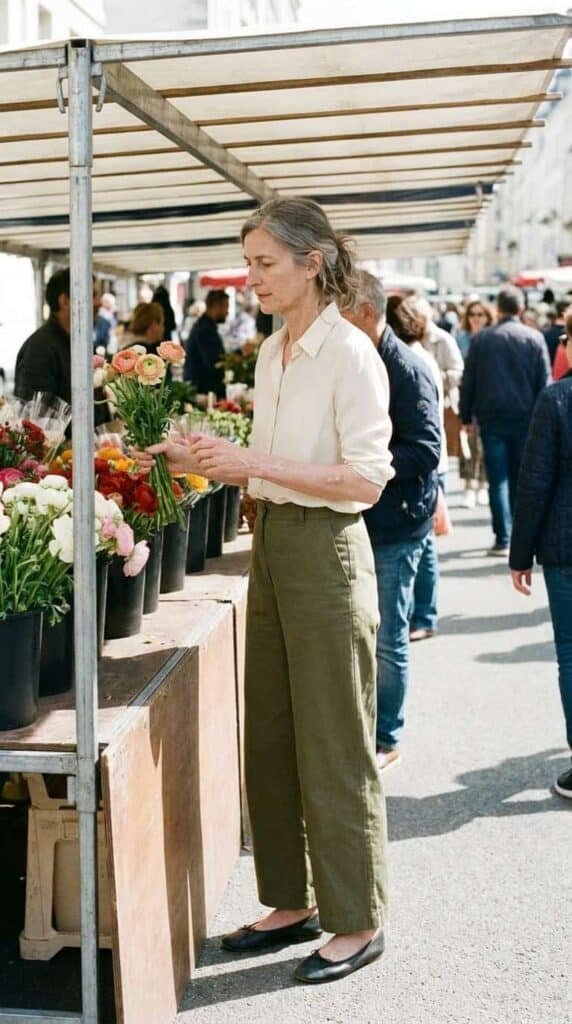
Wide legs with ballet flats, loafers, or clean sneakers, no heel required anywhere. Tall frames don’t need the lift, so the shoe can be chosen purely for comfort and line. Just keep the hem from dragging, length is the one thing to watch, not height.
15. The Tall-Inseam Investment
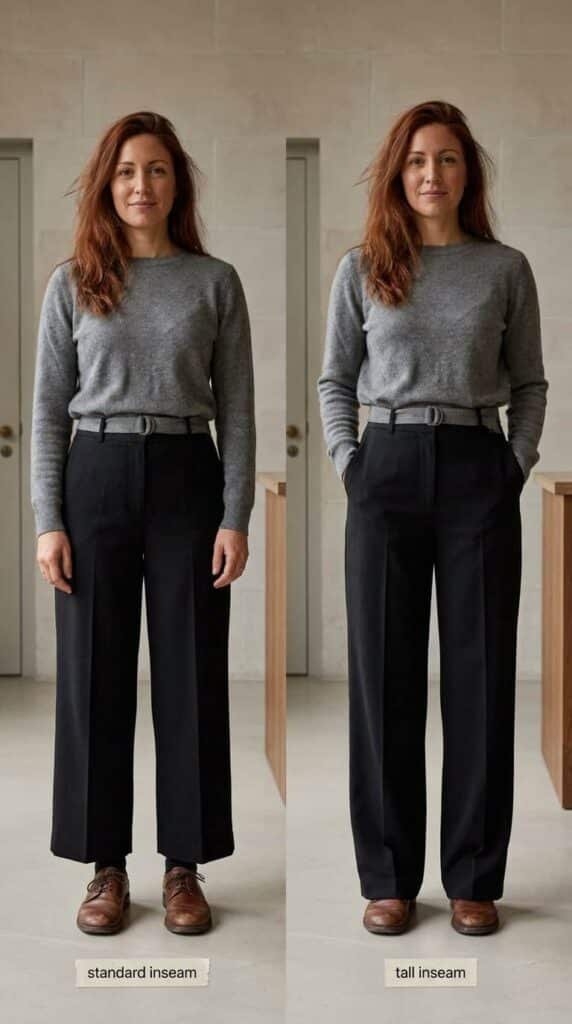
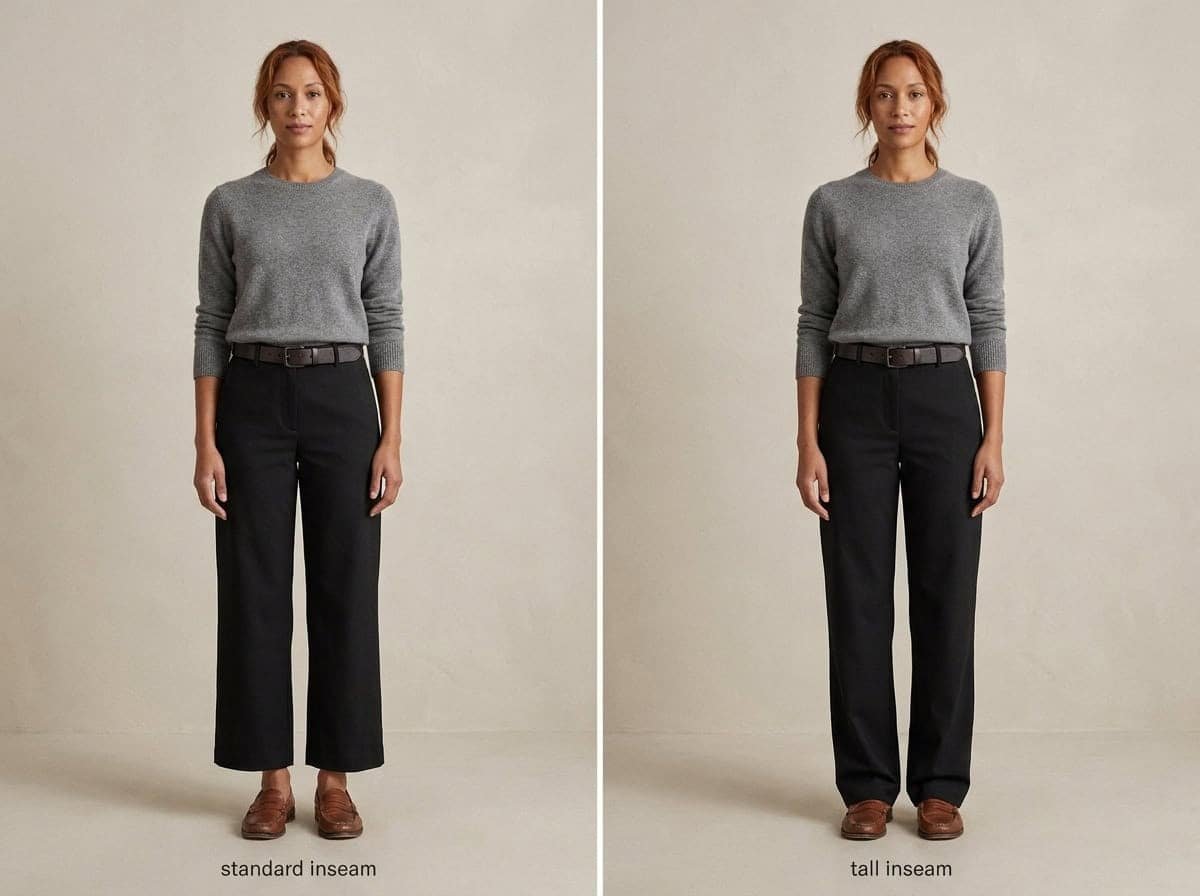
A wide leg bought in a tall inseam, or hemmed properly, with a fitted knit and a belt. The single biggest tall-frame problem is trousers that end awkwardly above the shoe, and buying tall sizing or paying for a hem solves it permanently. It’s the least glamorous tip here and the one that changes the most.
The Shoe Question, Answered by Height
Petite frames want a little lift and a clean toe: pointed flats, low pointed heels, platform loafers, heeled ankle boots. Mid-height frames can wear almost anything, sneakers, loafers, sandals, boots, with the volume adjusted up top when the shoe is chunky. Tall frames are free to go entirely flat and should prioritize hem length instead.
Everyone should skip the same things: very chunky wide boots that add bulk under an already wide leg, and ankle straps that cut the leg line at its narrowest point. Both are recoverable mistakes, but neither does the silhouette any favours.
Fixing the Fit You Already Own
Hem them. A pair that drags is the number one reason wide legs look sloppy instead of intentional, and a hem costs less than a lunch. Decide your hem while wearing the shoes you’ll actually pair with them, and if you’ll wear both flats and heels, hem for the flats and accept a slightly cropped look with heels.
Solve the untucked top. If you want a top left out but hate the bunching, a hidden waist band or a partial front twist tucked into the waistband keeps everything sitting cleanly without a full tuck. It’s the trick that makes tee-and-wide-leg outfits look styled instead of accidental.
And buy the rise before the label. A high rise does more flattering work than any brand name, in every one of the three height groups above, because it sets the waist line that everything else measures from. Get the rise and the hem right and the rest of this list is just preference.
If I’m Picking Three to Start With
The high-rise tuck with a tonal belt if you’re petite, the silk blouse and loafer workday for mid-height because it covers half your week, and the tall-inseam investment if you’ve spent years wearing trousers that end an inch too soon. Save this list to your style board on Pinterest before your next trouser shop, and send it to the friend who’s convinced wide legs don’t work on her, her section is right here.